FROM PARIS TO COPENHAGEN:
THE ADVENTURE OF THE PAS DE LA VESTALE
A testament to a forgotten genre
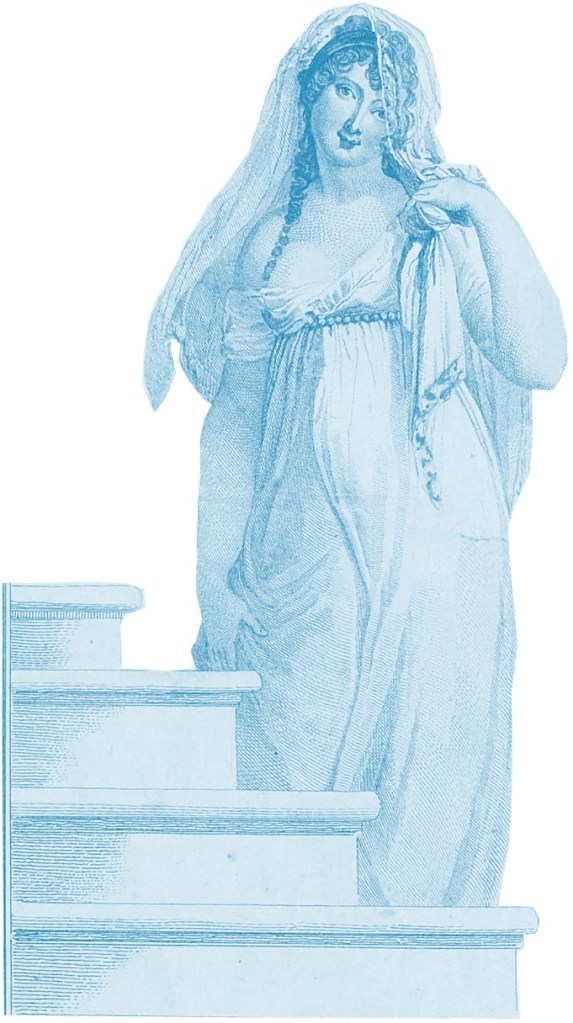
Our ambition is to reconstruct the “Pas de deux of La Vestale,” an excerpt from the opera by Gaspare Spontini, created in 1807 at the Paris Opera. The choreography of the first act was entrusted to Pierre Gardel (1758–1840), ballet master and director of the ballet school at this institution for nearly forty years.
Despite his intense activity, nothing of his work has survived. Yet his pas de deux was considered an essential of academic dance, to the point that Marie Taglioni and August Bournonville had to perform it to prove their talent to Parisian audiences. The Danish ballet master created a new version of it in 1835, which has been preserved thanks to oral transmission. A formidable exercise, this reinterpretation was rarely performed on stage but was filmed on several occasions.
Our work consists of reconstructing the choreography of Gardel’s pas, identifying its technical and stylistic characteristics based on the version described in a manuscript by Michel St. Léon, and comparing it with the Danish version. We will film the results of this research with the participation of two dancers from the Opéra de Lyon and students from the CNSMD of Lyon, in order to leave a record that is easily accessible to a wider audience.
We will also develop educational tools for schools to raise young people’s awareness of a research-based approach and enable them to gain a nuanced, embodied understanding of the historical development of classical dance.

The Pas de deux by Gardel in La Vestale (1807) – An exceptional choreography
La Vestale (The Vestal Virgin) by Gaspare Spontini, created at the Paris Opera, was part of a very specific cultural project that associated the myth of ancient Rome with Napoleonic imperial grandeur. It made a strong impression on its time, generating more than two hundred performances following its premiere.
The first act was set in the Roman Forum, with the backdrop representing the Palatine Hill and the banks of the Tiber, while the stage was structured around the Temple of Vesta and the palace of Numa. Bringing a festive dimension, the divertissement conceived by Gardel celebrated the triumph of General Licinius. It included several lively dances and a pas de deux in the genre sérieux, also known as the noble style, which he created for the famous Mademoiselle Clotilde (Clotilde Mafleuroy) and Monsieur Beaulieu (Jean-Baptiste Renaud).
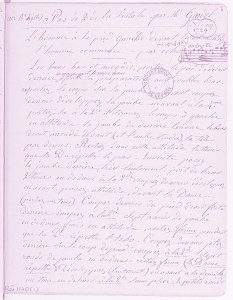
Michel St. Léon (father of the renowned Arthur Saint-Léon) was Gardel’s assistant as a fencing master during the creation of the opera, and he recorded the choreography of the pas de deux in one of his notebooks written thirty years later, when he was serving the court of Württemberg in Stuttgart. This precious manuscript, preserved at the Bibliothèque-Musée of the Paris Opera, is a rare testimony of what was known as the “French dance,” the style that followed the Belle Danse and was, in the eyes of all of Europe, the very example of elegance, precision, brilliance, and grace in this art.
Gardel’s choreography is also surprising due to the technical challenges posed to the woman, who competes with the dancer by executing the same steps as him, following his lead. However, the choreography still retains a link to the previous century through the mirrored relationship of the couple.
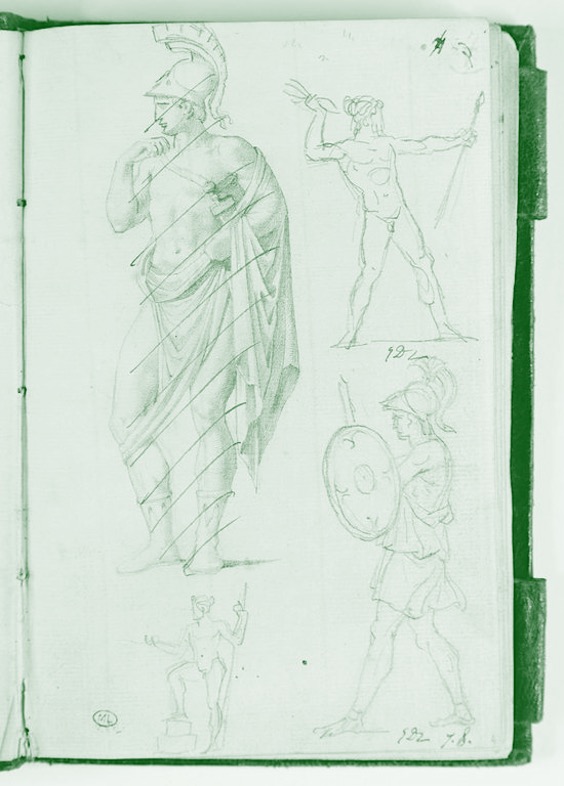
The Danish Adventure – Comparing the Bournonville and Gardel versions
To highlight the similarities and differences between the two choreographies, we will benefit from the expertise of leading specialists in the Bournonville repertoire: Dinna Bjørn and Eric Viudès, as well as Francesca Falcone, a specialist in the theory of dance in the Danish School. We will rely on existing filmed documents and the oral testimony of performers and researchers, in order to compare the two choreographies.
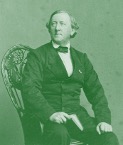
The Pas de la Vestale by August Bournonville
Inspired by the choreography of Pierre Gardel, August Bournonville introduced the Pas de la Vestale to Denmark in 1835, in his own version, which he danced with Lucile Grahn. He rewrote the theme, making it about a dance teacher teaching steps to his student. After his death in 1879, the Pas de la Vestale was incorporated into the “Saturday School” by Hans Beck, who organized Bournonville’s classes according to the six days of the week for the Royal Danish Ballet. Since then, the choreography has been passed down from generation to generation exclusively through these weekly training classes for the company. In the 1960s, the Pas de la Vestale was revived for Danish television by Hans Brenaa, danced by Toni Lander and Flemming Flindt. In 2005, Gudrun Bojesen and Thomas Lund performed it for the DVD edition of The Bournonville School. However, it was not until 2014 that the Pas de la Vestale was once again performed on stage, when Dinna Bjørn and Eric Viudès passed it on to two young dancers from the Paris Opera Ballet, Alice Catonnet and Antoine Kirscher, during the gala closing the Bournonville Academy in Biarritz. This marked its return to France, once again confirming the French-Danish connection.
Dinna Bjørn
Artistic team

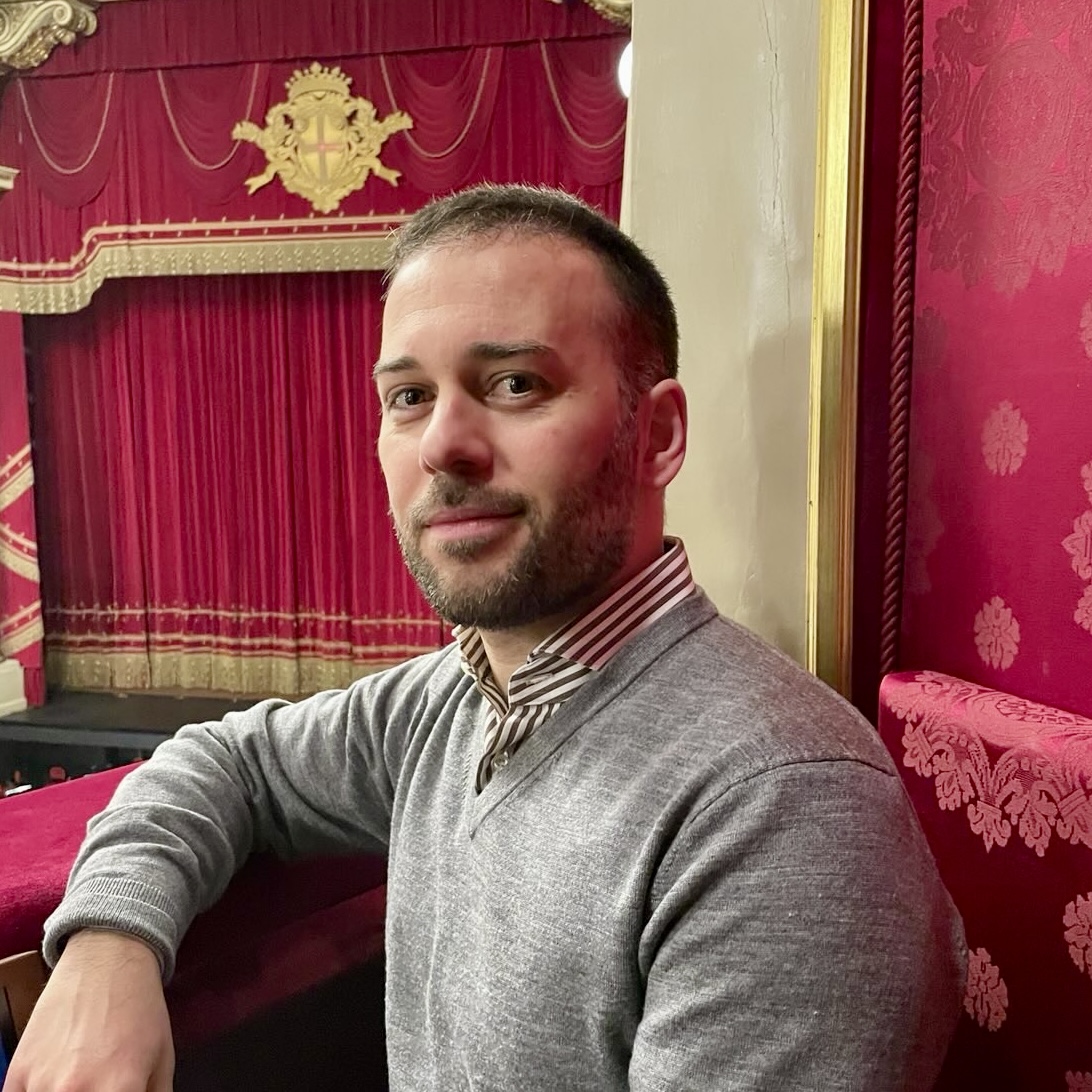

 Bruno Ligore